
A Custom CMS So Anhambi Can Run Its Own Site
Anhambi needed another company to change anything on its own website. Instead of delivering one more site held together by plugins, I designed and built a custom management panel, an internal product the marketing team uses on its own to handle products, banners, the blog and page copy.
The problem
Anhambi's website was maintained by a local partner for a monthly fee, and the company didn't own the code. Swapping a banner, adding a new feed or fixing a sentence turned into a request to another company, with a queue and a cost.
Marketing wanted autonomy, and the first request was a WordPress install on Anhambi's own server. But the catalog has a lot of classification (brand, line, species, life stage, size) and has to show up filtered for three different audiences. Building that with plugins would just trade one dependency for another.

The decision
I proposed treating the panel as the main product of the project, and the website as the storefront it feeds. I designed the panel around the team's routine, not around a generic CMS template. The navigation follows the WordPress logic marketing already knew, but it only has what they actually use.
The panel has its own identity: blue for management actions, the brand's red only on the public site. That way it's always clear whether you're editing the site or looking at it.

How the panel works
Products. Each product has full classification, barcodes and SKUs, images and a spec sheet. Adding them one by one wasn't going to work, so the catalog comes in through a spreadsheet, with a process that standardizes the data before upload. The order products appear on the site is set by dragging, not alphabetically.
Banners, showcases and copy. The home banner, the banners on each page and the product showcases are all editable, with a lock so nobody deletes the main banner by accident. Institutional copy, like the About page and the privacy policy, also comes from the panel.
Blog and forms. Posts are published by audience, and each page of the site pulls only what belongs to it. In the forms module, the team picks who receives each type of contact.
Access and support. Sign-in uses the company's Microsoft account, open only to emails from its domain. Every change is recorded in the logs, with who made it and when. And if something goes wrong, the team opens a ticket right inside the panel, with a screenshot attached.

The site it feeds
On top of the panel runs the new website, organized for Anhambi's three audiences: retailers, pet owners and livestock producers. Each one has its own page, with separate products, content and contact. The catalog filters only show options that actually have products, because they read straight from what's registered in the panel.
The outcome
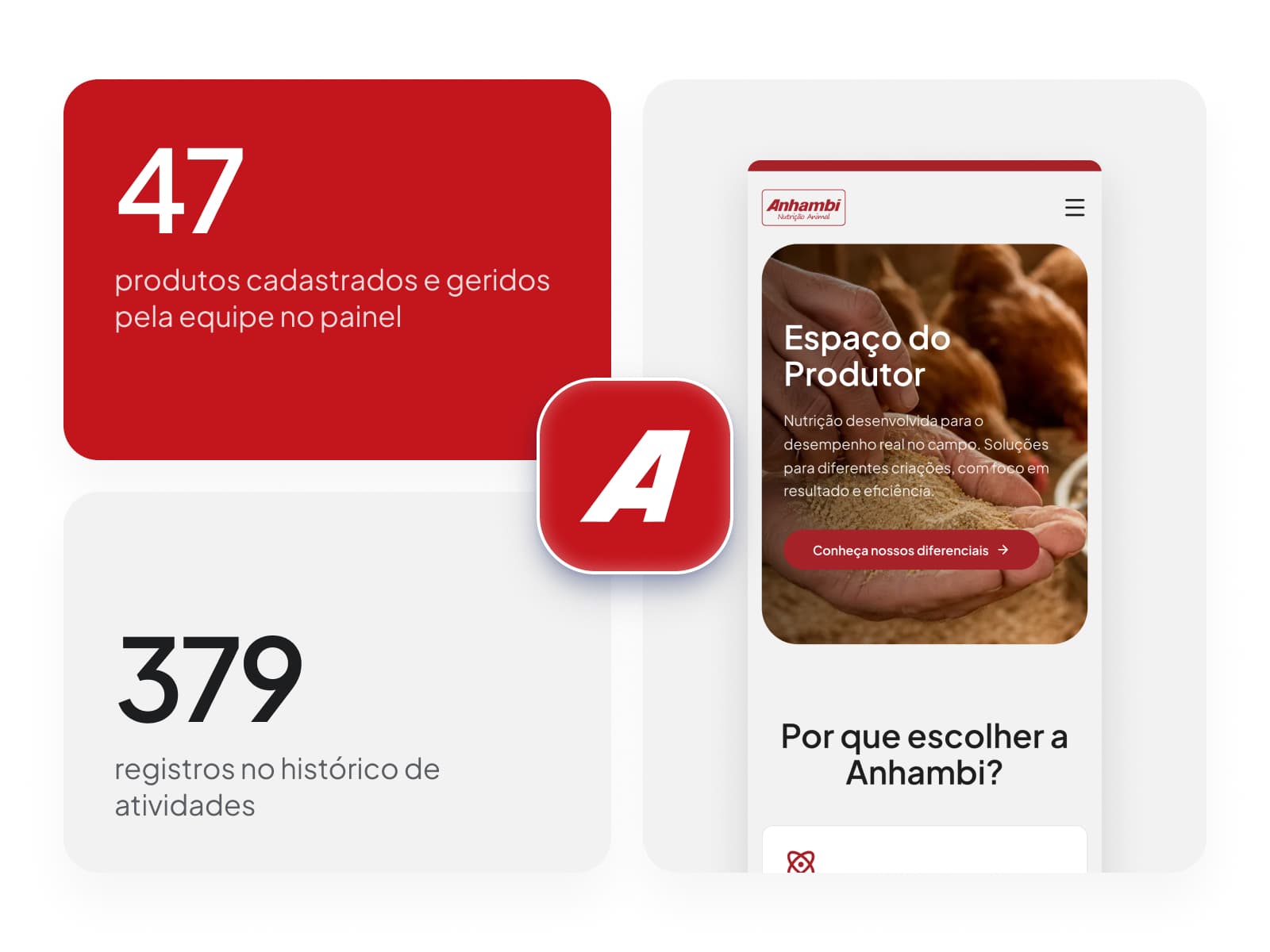
Today the panel manages 47 active products and 15 blog posts, with each page's showcase put together by the team itself. The activity history already has 379 entries, covering changes made in the panel and leads that came in through the site.
On the site, there were 42 leads in 30 days from 38 different people, already split by audience: 15 from retailers, 17 from pet owners and producers, and 10 about other topics. 58% of visits came from organic search, and PageSpeed sits at 90 on mobile and 99 on desktop.
Anhambi now owns its code and has a panel the team runs without depending on anyone.
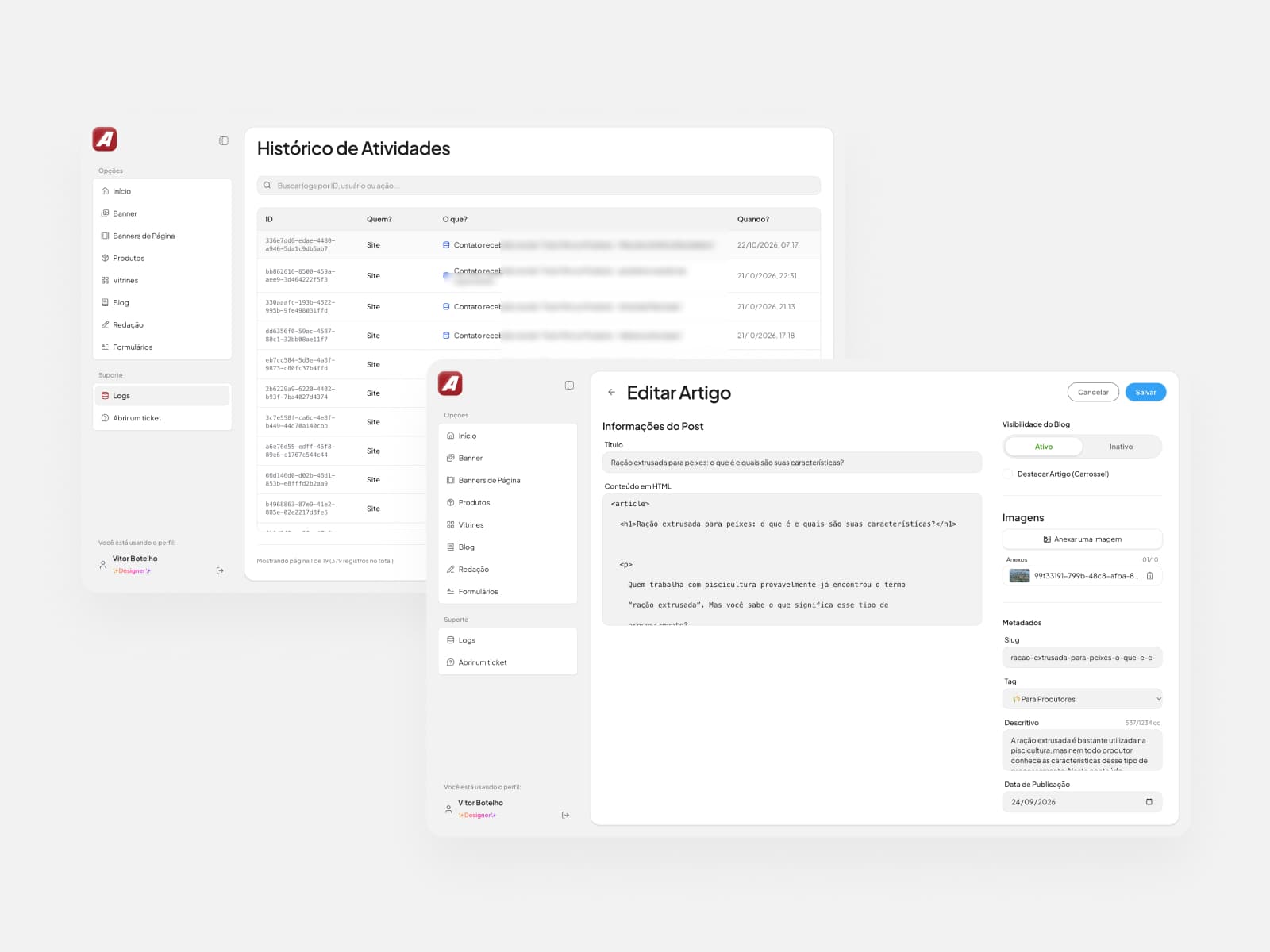
Anhambi's own admin panel, with ten modules: home, products, banners, page banners, showcases, blog, copy, forms, logs and support. Sign-in with the company's Microsoft account, product imports from a spreadsheet, catalog order set by drag and drop, and a history of every change. On top of it runs the new website, organized by audience, which brought in 42 leads in its first month.